All help topics
Help topics
- Getting Started
- Sales & POS
- Products & Inventory
- Purchases & Suppliers
- Customers
- Staff & Permissions
- Reports
- Branches
- Hardware
- Payments
- Settings
- Troubleshooting
- Billing & Subscription
- Workshop
- Training
- Sales Agents
- Laundry
- Accounting
- HR & Payroll
- Hotel
- Services
- Communication Center
- Online Store
- CRM
- Restaurant
- F&B Manager
- Production
- Projects
- Asset Management
- Device Repair
- Bookings & appointments
- Set up for your industry
- Hire Purchase
- Refer & earn
- All topics
On this page
How to Handle a Default and Repossess Goods
Mark the agreement defaulted with a reason. If the customer still won't pay, click Repossess goods, choose what you are taking back and the credit to give, and confirm. The goods go back into stock as a return on the sale and the agreement closes as Repossessed.
Step 1: mark the agreement defaulted
Open the agreement and click Mark defaulted, with a reason. The agreement is still collectable: payments can still be taken, and it shows under Defaulted on the Due & overdue list. If the customer starts paying again, click Reinstate.
Step 2: repossess
- On a defaulted agreement, click Repossess goods.
- Enter how many of each item you are taking back.
- Check the Credit to the customer. It is pre-filled from your Settings: either exactly what they still owe (money already paid is kept), or the goods' value less your repossession fee. Change it if the goods came back damaged.
- Leave Waive unpaid late fees ticked if you are not chasing the fees.
- Give a reason and click Repossess.
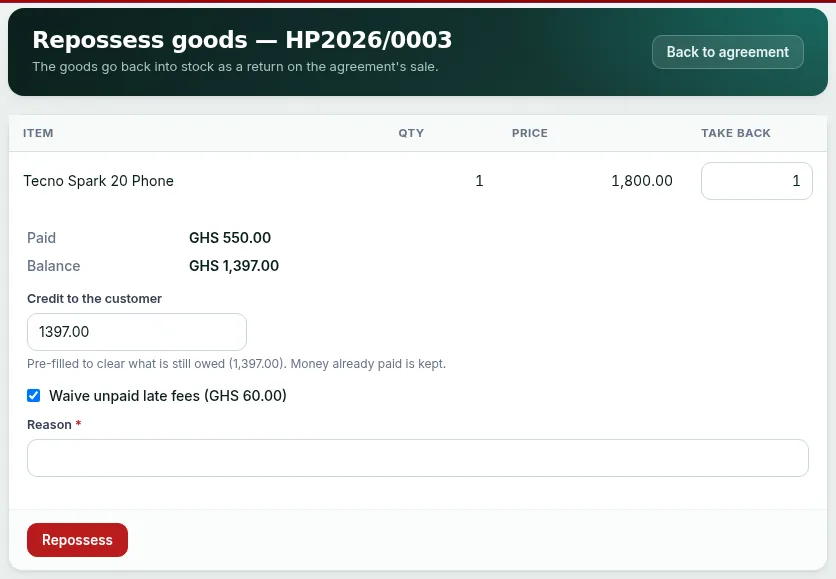
The goods go back into stock at the agreement's branch as a return on the sale. If the credit is more than the customer owed, the agreement shows how much is owed back to them; refund it from the return on the Sales screen.
A repossession lowers the customer's rating.
Common questions
I repossessed by mistake. Can I undo it?
Was this article helpful?
Thanks — your answer helps us improve this article.
Still need help?
Can’t find the answer you’re looking for? Our support team in Accra can help.